![]() |
| Mudlarking Finds: Large Chunks from Roman Box Flue Tiles |
Friday, 26 October 2012
Roman Box Flue Tiles AD 43- 410
The last few posts have been dominated by the Georgians, so time to go back to the very old. Over the last year I've slowly built up a small collection of largish chunks of tile with rather attractive, simple indented patterns. It was time to work out what they were from.
Satisfyingly old, the Portable Antiquities Scheme database helped me identified their origin, Roman box flue tiles. Took me a little while longer to work out what this meant. They were used in Roman Baths and villas. Essentially a hollow box with two open ends, made of clay. They were placed one on top of the other in the walls and carried hot air from the under floor hypocaust system into the roof and then outside, heating the inside walls on the way.
Saturday, 20 October 2012
Pratt Ware 1780s – 1840s.
How great to have a type of pottery called Pratt Ware. The few examples
I’ve found probably aren’t strictly from Pratt Ware whose defining feature is
relief moulding, the forms were usually figures or jugs. Instead I’ve found
tiny, tiny thin pottery shards hand painted in pratt colours, magnified in the photo below. They seem to come from both creamware and the
blue tinged pearlware, both are present in shards below. I suspect they may all
be from tea bowls or saucers.
There is something I just love about these pieces, the combination of the
muddy greens, browney oranges with flashes of cobalt blue and
the snapshot of such detailed miniature hand painted designs crammed onto each of these small fragments.
Their name derives from the pottery they became associated with, the
Pratt pottery in Fenton Staffordshire, although this type of pottery was also
churned out by many others in Staffordshire and in other areas of England and
Scotland. I've found it almost impossible to track down images of table and teaware in pratt colours, although I've had more luck in finding the more 'official' pratt ware.
The hand painted ware was phased out around 1840 as the cheaper and more popular transfer wares began to predominate
![]() |
| Mudlarking Finds: Creamware and Pearlware hand painted in pratt colours |
In this period artists were constrained in the colours they could use. Only colours
that could withstand the high kiln temperatures required to fire lead glaze
were available to them, namely cobalt for blue, copper and lead for greens,
manganese oxide and iron were mixed to produce brown, orange was produced by
adding iron oxide to yellow oxide. But there is something even more specific
about the tone of Pratt colours.
| Prattware jug, circa 1820 (Martyn Edgell) |
| Prattware jug with the Kings initials GR, circa 1810 (Martyn Edgell) |
Saturday, 13 October 2012
Tea Ware
Dedicated to Norma, queen of teakies.
Tea first introduced to London in the mid 17th century created demand for affordable, refined heat resistant cups and other equipment worthy of this expensive brew. Initially small handless Chinese porcelain tea bowls were imported.
In 1750 Robert Adams inspired porcelain tea sets in which tea cups had
handles. Adams tea cups were taller than their base and came with a saucer –
there began the English tea service set – with matching tea pot, sugar bowl,
milk jug and even tea spoons. The English welcomed the handle having found the
tea bowls rather messy and liable to burn their hands.
Tea first introduced to London in the mid 17th century created demand for affordable, refined heat resistant cups and other equipment worthy of this expensive brew. Initially small handless Chinese porcelain tea bowls were imported.
In 1700 large saucers appeared. Some poured their drink into the saucers
allowing the tea to cool and drank directly from these.
The tea bowls I came across at my recent trip to the V&A were so much smaller than I’d imagined, due to the exorbitant cost of tea I suspect.
![]() |
| Pieter Gerritsz Van Roestraeten. Chinese Tea Bowls, 17th century (on familiar things) |
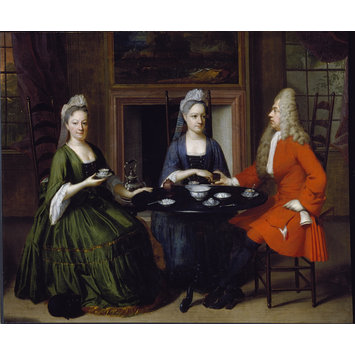
| Fashionable family sitting around a tea table 1727 Richard Collins (V&A) |
The tea bowls I came across at my recent trip to the V&A were so much smaller than I’d imagined, due to the exorbitant cost of tea I suspect.
| 17th Century Chinese Export Porcelain Tea Bowl. |
Throughout the 18th and 19th centuries demand for
new and cheaper teaware grew apace, driven by the growing fashion of tea
drinking. We see the rise and fall of several types of ceramic. Europeans began
to produce their own version of porcelain. The first success in England was at
the Chelsea Porcelain Manufactory in 1743- 5. In the 1750s Wedgwood perfected
the production of fine stoneware ‘black basalt ware’, popular for around 50 years. Stoneware is water proof, so no
glaze was required. The 1770s brought Wedgwoods’s
refined red stoneware Rosso antico, affordable
cream ware, shortly followed by pearlware.
Bone china was developed in England in the 1800s, by Joseph Spode,
another name which keeps popping up. It was lighter and cheaper than porcelain
and apparently better at carrying bright colours. It became and remains the
posh tea cup of choice.
| 1820 Spode London shape ( from spode history blog) |
I’ve found a number of shards with small circular ‘stands’ , sometimes
with a tiny design in the base. I suspect these are the bases of tea bowls, two
I think are pearlware because of their bluish tint, the other porcelain.
![]() |
| Mudlarking Finds: Pearlware and Porcelain Tea Bowl Bases |
![]() |
| Mudlarking Finds:Tea Bowl Bases |
Occasionally I find the shallow curve of what I assume are saucers. The
two with transfer ware I suspect are creamware the older middle hand painted example
pearlware.
This last group of fragments I’m guessing are also from saucers. In each
case the middle of the base. This time their design is not so ‘tiny in the
middle’. Each has a stand beneath, the curve of which is shallower than the tea
bowls. A mixture of pearlware and porcelain.
![]() |
| Mudlarking Finds: Saucer Fragments |
![]() |
| Mudlarking finds: Pearlware and Porcelain Saucer Fragments |
Saturday, 6 October 2012
Thames Mudlarking: A Day's Finds.
Late last night a clipboard of google tabs were
open as husband and I planned our Friday date. Our day had to be planned with
military precision, as low tide was later than usual and we had to be back at
3:30 to welcome our youngest home from school.
Couldn’t quite settle into the rhythm of it
today, probably because I only had an hour. Surprised to see quite a few people
down there today. Nothing stands out as find of the day, but some satisfying
pieces none the less.
Pleased with this attractive and unusual piece
of delft, with similar dentric patterns to
mocha ware.
Surprised to come across a bottle hundreds of
years old, but with cork still intact. Now that I’ve clocked the mother of pearl very aware of its abundance in one foreshore section, the reflected light
kept morse coding me. Found an incredible patch at low tide, just chocker with
bits of crockery, mainly plain white, but intersperse with tiny, wafer thin pieces
of porcelain, my favourite polychrome piece with the tiny house, in the centre below.
I clearly picked up rather a lot in an hour, more of the same really clay pipes, glass bottle necks, handles, strainer, quite few 'browns' including slipware, stoneware and what I suspect are very old tiles. The blues are westerwald, delft, transferware, spongeware, porcelain....
I had 10 minutes to get to the Whitechapel art
gallery to meet husband. I do love this
gallery. I like the fact you literally swing out of the tube and round again
into its doorway, its modern interior and collection of small galleries poked
into all corners of this historic building. All the artists were new to me. Matt
Stokes double viewing video ‘Give to me the life I love’ was inspired, a
brilliant if uneasy capturing of Bengali London stories, poetry, cash and
carry, racism, music & protection rackets. An unexpected highlight for me. The other was Italian
artist Giuseppe Penone’s Spazio di Luce (space of light), a larch tree cast in
bronze, but not in a straight forward way, completely beautiful, confusing,
calming & wonderous.
It was all just up husband’s street as I’d
suspected, with his preference for sculpture and left field. His favourite was
Maurizio Cattelan’s industrial bag of rubble from Milan’s Contemporary Art
Pavilion bombed by the Mafia. Can’t finish without a mention of the squirrel’s
suicide, which I want to say was funny but somehow it wasn’t, making the human
condition seem even more sorrowful.
The final part of the plan was to make our way
along Whitechapel Road to Fieldgate (therein must lie a story) to Tayyabbs
which serves the best tarka dhal I’ve ever tasted, which my canny sister Laura introduced to me this year. It has such a vibrant and interesting
mix of people, a real fisheye into this part of London. We concluded that going
out for lunch is better than evening dining. Somehow it seems more extravagant,
indulgent, spontaneous and you tend not to over order, avoiding all that that
entails. Very sleepy we were rocked into
a stupor on the train back. Tried to preserve that state as I walked home, at 2pm we returned earlier than expected so I drifted off to sleep, despite our eldest son’s rap, for a luxury two hour
nap.
I was hankering after a mudlark- which has
become my antidote to the slavery of work. Failed to ensnare husband in this
part of the plan. He was quite emphatic, pointing out he wants to make pottery
not pick up old pieces.
Bounced down the road excited about our day. As
the bus jerked its way over tarmac darkened with wet, noticed
almost everyone was dressed in something black. Loose low grey clouds were moving
purposefully in the shots of sky framed by London architecture. Funny time of
year this – feels too warm and green leaved to be Autumn, but the slanted
light, evenings drawing in and greying weather all say otherwise. Autumn is the
first season which has made itself present on the foreshore.
I was the first down there today. The tide was
going out so fast it threw up small waves. I took some photos of my first finds in situ
for Paige from Florida, who has been wondering...
![]() |
| Mudlarking Finds In Situ |
First find was this chucky stoneware piece with
relief moulding of vine leaves and grapes clutching the top, I suspect from mid 19th Century.
![]() |
| Mudlarking Find: White Stoneware with Vines |
![]() |
| Mudlarking Find: Delftware |
![]() |
| Mudlarking Find: bottle with cork |
I clearly picked up rather a lot in an hour, more of the same really clay pipes, glass bottle necks, handles, strainer, quite few 'browns' including slipware, stoneware and what I suspect are very old tiles. The blues are westerwald, delft, transferware, spongeware, porcelain....
![]() |
| Mudlarking Finds: Pottery shards, glass and clay pipes |
| Giuseppe Penone's Spazio di Luce, Whitechapel Gallery |
| Maurizio Cattelan at Whitechapel Gallery |
Friday, 28 September 2012
The History of Tea
So many Thames mudlarking finds are from tea
ware.
‘Coffeehouses were such important
institutions to London society that one did not inquire where a fellow lived but
rather what coffeehouse he frequented’. (research.history.org)
As I was trying to trace its development, it
occurred to me to make sense of it all; the place to start was the history of
tea. Tea was first brought to England in the 17th century and first
consumed in coffee houses. ‘China tea’ and hot chocolate were introduced to the
beverage menu from the late 1650s. Thomas Garroways promoting tea in his coffee
house advert placed in Mercurius Politicus in 1658 ‘That
Excellent, and by all Physicians approved, China drink, called by the Chinese, Tcha, by other nations Tay alias Tee, ...sold at the
Sultaness-head, ye Cophee-house in Sweetings-Rents, by the Royal
Exchange London".
| Coffee House 17th Century from British Museum. |
Samuel Pepys noted in 1660 "I did send for a cup of tee, (a China drink) of which I had never had drunk before". At one level the coffee houses appear to be equitable establishments with the aristocracy and wealthy business men rubbing shoulders with the less well to do. These establishments buzzed with discussion of current affairs and functioned as business networking hubs.
Different coffee houses attracted different clientele. Garraway’s was the haunt of scientists and natural philosophers. St James’ was favoured by traders and mariners. Will’s was for poets and White’s for actors and musicians. The mark of a true Renaissance Man in those days was to regularly patronise as many different houses as possible.
Coffee houses play an important part in London history
‘Lloyd's of London had its origins
in a coffeehouse run by Edward Lloyd, where underwriters of ship insurance met to do business. By
1739, there were 551 coffeehouses in London; each attracted a particular
clientele divided by occupation or attitude, such as Tories and Whigs, wits and stockjobbers, merchants and
lawyers, booksellers and authors, men of fashion or the "cits" of the old city center. According to
one French visitor, Antoine François Pervost, coffeehouses, "where you have the right to read all
the papers for and against the government," were the "seats of
English liberty." In London, coffeehouses preceded the club of the mid-18th
century, which skimmed away some of the more aristocratic clientele. Jonathan's Coffee-House in 1698 saw the
listing of stock and commodity prices that evolved into the London Stock Exchange. Lloyd's Coffee House provided the
venue for merchants and shippers to discuss insurance deals, leading to the
establishment of Lloyd's of London insurance
market, the Lloyd's Register classification society, and other related businesses. Auctions in salesrooms
attached to coffeehouses provided the start for the great auction houses of Sotherby's and Christie's. In Victorian England, the temperance movement set up coffeehouses for the working classes, as a place of
relaxation free of alcohol, an alternative to the public house,’ (Wiki)
| Edward Lloyd's Coffee House 1798 |
The tea they consumed would be considered
undrinkable today. Until 1689 tea was taxed in liquid form. The day’s tea would
be brewed in the morning enabling the excise officer to tax, it was then kept
in barrels and reheated when needed throughout the day. After 1689 tea was
taxed by weight and fresh brews ensued.
Outrageously women were banned from coffee
houses. You could however buy loose tea from coffee houses, this enabled women to
enjoy tea at home. Kicking off the tradition of afternoon tea, women from
wealthier households would gather for tea parties, a very genteel social
occasion. The tea equipment would be set up by servants and the lady of the house
would unlock the tea caddy and spoon the precious tea into the tea pot. Tea was
unbelievably expensive, up to £10 a pound more than a labourer earned in a
year. Sugar was added, another very expensive import. In this period milk was not
used.
| Tea drinking at home ca 1715 (Victoria and Albert Museum) |
Tea stimulated various claims and warnings,
Pepys writing again in 1667 ‘Home, and there find my wife making of tea a
drink which Mr. Pelling the Pottecary tells her is good for her colds and
defluxions."
'After experiencing the Dutch "tavern garden teas", the
English developed the idea of the Tea Garden. Here ladies and gentlemen took
their tea out of doors surrounded by entertainment such as orchestras, hidden
arbors, flowered walks, bowling greens, concerts, gambling, or fireworks at
night. The tea garden began in the reign of King Charles II. Diarists John
Evelyn and Samuel Pepys recorded visits to the New Spring Garden (also called
Vauxhall or Foxhall) in the early 1660s. The tea
garden reached the height of its popularity in the mid 18th Century the most famous were Vauxhall and Ranelagh.
The gardens were both places to stroll and to be seen.
Tipping as a response to proper service began in the Tea Gardens
of England. Small, locked wooden boxes were placed on the tables throughout the
Garden. Inscribed on each were the letters "T.I.P.S.". If a guest wished the waiter to hurry (and
so insure the tea arrived hot from the often distant kitchen), he dropped a
coin into the box on being seated "to insure prompt service", hence TIPS. '(teacakesandteddybears.com)
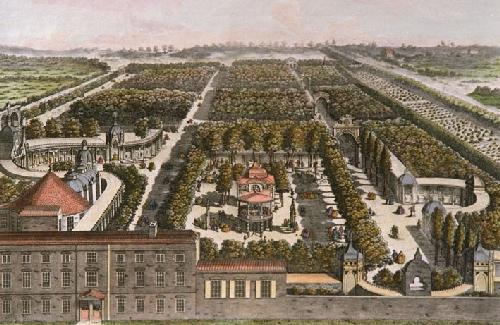
Vauxhall Pleasure Gardens Samuel Wale 1751 |
Between 1720-1750 imports of tea through British East Indian Company quadrupled. One commentator Fernand Braudel asked "is it true to say the new drink replaced gin in England". By 1766 exports from Canton stood at 6 million.
In 1785 the government significantly reduced
the tax on tea in an attempt to undermine the flourishing black market, which
was diminishing the profits of legal tea merchants. Whilst tea remained
expensive it was now acceptable to a much broader spectrum of society, seeds of
our national tea drinking habit were set.
The impact on pottery covered in
the next post.
Sunday, 23 September 2012
A Good Days Mudlarking
To
celebrate partial return to part time working, Friday before last treated myself to a mudlark
and a day out in “central” as the older teens call it. Whilst
grey and 12 degrees surprised to see Londoners jumpered and coated, perhaps anticipating
the autumn ahead. Optimisticly I had
pulled on jeans and a thin sleeveless top. As I travelled down on the bus, hoped
it wasn’t me who’d made the wrong clothing choice. Not a particularly low tide
today and at 7:30am a bit early for me. Confused by the buses diversion
mistakenly got off too early. Wiggled my way down to the Thames through the ancient alleys and courtyards, passing the city workers noticing faces hung with work worry.
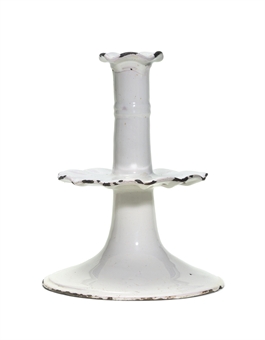
An unexpectedly good day for potentially 400 year old delft
ware, I’ve got it into my head that the white cylindrical object is a
candlestick (pic of complete one from 1650 below). Very taken with the old looking
snatch of tulip like flowers, the base of a large jar and the smaller slightly
more refined hand painted shards.
Very pleased to find the handsome good as new salt glazed
stoneware base, probably originating from a Bellamine jug, alternatively a plainer drinking jug. They weren't often decorated with rings around the base and I suspect this one is German. It could be more than 400 years old.
The next set are very old, I don’t usually pick this stuff
up any more, but today - well just did. The jug handle I'm pretty sure is
medieval Surrey/Hampshire ware, the other more refined
buff piece with a thicker green glaze is possibly Tudor, the red pieces
may be Tudor too, intrigued by the chunky green glazed corner piece.
Moved by the three small pieces of hand painted ceramic, with
their little dots, dashes, stars and imperfect lines, probably all Georgian
Was this tiny, tiny flower painting done by hand too?
Some nice illustrations captured in transfer ware,
Beginning to get a bit more interested in the remains of very old glass bottles shown with a couple more clay pipe bowls, the smaller one from 1610.
Still very taken with the bold as brass transfer ware blooms
The rest is a motley collection of pearlware handles, bits of tea bowl, drainer, solid agateware (a handle of a carving knife?), embellished creamware, a cute bit of slipware handle and the usual stoneware,debased scratched blue, mocha and some banded ware, all of which somehow found their way into my bags too.
After I’d had my fill made my way over Millennium bridge and
along the Southbank towards the Royal Festival Hall. London was so quiet,
workmen dismantling after the Olympics and recent festivals and later erecting
stalls and stages for yet more. The Southbank must be London’s best public
spirited development of the last 20 years. It just gets better and better, I
love the new riverside glass entrance to Blackfriars station and nearby colourful
planting. The national theatre reaches out with its huge green outside
armchairs, a colourful giant material baobab sculpture was rising out of Queen Elizabeth Hall’s grey concrete, the large world flags topping
the Royal Festival Hall catching the wind. Crossed back over the Thames, the Hungerford bridge depositing me at the Tube
just in time to get to South Ken to meet Victoria at the Victoria and Albert Museum.
I never fail to enjoy coming up the escalator at South Ken and diving straight into the 1885 white tiled tunnel leading to the museums, as a kid it seemed endless. So good to meet up again with Victoria, such a treat to sit in the V&A's central courtyard in the sunshine, backed by beds of orange dahlias and purple flowers, sharing our stories of summer. Felt like one of our long ago trips to Paris.
Very happy to scamper down the familiar steps to the exposed
shore. The upper foreshore was covered in a slick of silky mud due to the absence of waves from tourist boats in the early morning.
For an hour I was the only one down there. After a four week gap I noticed I was full of
determination my eyes sharply and quickly interrogating the rubble, hunting for
those ancient fragments. Aware my
husband would probably have left to visit his mother by the time I returned I
didn’t hold back on filling my bags.
Met a lovely guy from Cornwall who’s been mudlarking for 4
years. He’s particularly interested in stoneware and very generous with his
knowledge. He pulled out a couple of
pieces he’d picked up today, one the remains of a tankard that would have held
a gallon. 300+ years ago they were into big and sharing. In the past he’d delighted in the same squiggy
clay pieces littered with finger prints that we’d come across and had also
concluded they’d been used to position pots in a kiln. When I scrabbled to find
the small mother of pearl lovely I’d found, he asked if I’d noticed the large chunks on the foreshore, I hadn’t. He surmised there must have been a workshop nearby. A co-incidence as today I’d picked up a
handful of mother of pearl slithers which had congregated in the same place. My
friend Gerry had already guessed that a piece I’d recently given her had been
worked. It is the detective work that surrounds these tantalising finds that is so compelling.
It was a great day for finds. I guess find of the day has to be the 2
centimetre mother of pearl 'cross' with a tiny hole through the pointy bit at the
top.
Now I look more closely at the mother of pearl pieces I
picked up they do look as though they have been worked, their fairy tale sheen catapults me back to the magic of childhood beach stumble upons.
![]() |
| Mudlarking Finds: Mother of Pearl Slithers |
![]() |
| Mudlarking Finds: Delftware |
| 1650 London Delft Candelstick probably Southwark (Christies) |
![]() |
| Mudlarking find: Salt glazed Stoneware Bellamine Base. |
| German Bartmann Jug 155101700 (Museum of London) |
![]() |
| Mudlarking Finds: Medieval and Tudor Shards. |
![]() |
| Mudlarking Finds: Hand painted Georgian shards |
Some nice illustrations captured in transfer ware,
Beginning to get a bit more interested in the remains of very old glass bottles shown with a couple more clay pipe bowls, the smaller one from 1610.
![]() |
| Mudlarking Finds: Old bottle necks and clay pipes |
![]() |
| Mudlarking Finds:Transferware blooms |
![]() |
| The rest of the Mudlarking Finds |
| Festival of the world Southbank Centre |
Later we ascend the grand stairwells lined with sheets of
marble on the last mission of the day. As we reached the top, a tower of glass rose from the floor and there they were, shelf upon packed shelf
of the ceramics I’ve become so familiar with through my foreshore finds. I have
to admit I was slightly over exciting , my heart racing just a little bit
faster. It was just great seeing them ‘in the flesh’ together in one place,
almost like old friends. Also very funny knowing that a year ago I wouldn’t
have given the time of day to a load of old crocks – in fact I couldn’t have
thought of many things that would have been more boring.
Wednesday, 19 September 2012
Rosso Antico and Red Stoneware
Perhaps it's not surprising that a Wedgwood pottery shard distinguishes itself so markedly on the foreshore. They are clearly so well made, the markings so precise, so refined.
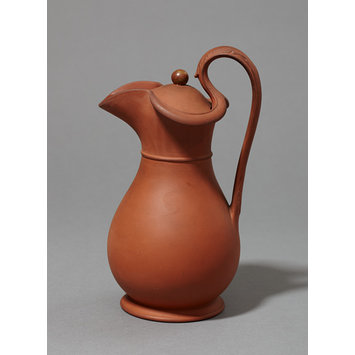
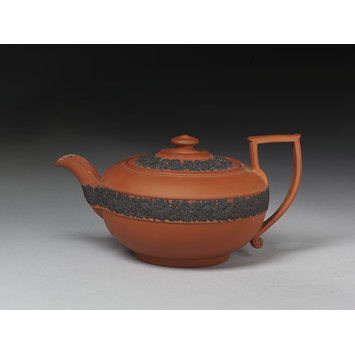
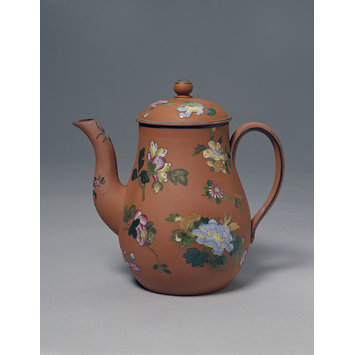
I've only found one piece of a handle from what I think is Rosso Antico, not an Italian wine as google would have it, but unglazed red stoneware produced by Josiah Wedgwood from 1760s. He was not the first to produce red stoneware, John Dwight in the 1670s made imitations of the red porcelain Chinese imports which appeared in London from the 1660s. The Elers brothers began producing a sophisticated red stoneware in 1693 in Staffordshire, later moving to Chelsea in London, once their production secrets had been discovered by other potters in the area. Both ended production by 1700. Now that I look at the photos my shard is closer in colour to the browney Elers jug below, than the redder Rosso Antico of Wedgwood - so clearly identification not for the amateur here. Last Friday visited the V&A British Ceramics collection for the first time and none of the red unglazed stoneware held the handle markings seen on shard above, the items below were also tiny, so much smaller than I'd imagined.
Wedgwood was never very keen on Rosso Antico believing it was just too close to redware which anyone could produce and therefore didn't fit with his aspiration to produce premium pottery of distinction. He therefore only made it sporadically, production ceased in 1940.
![]() |
| Mudlarking Find: Red Stoneware |
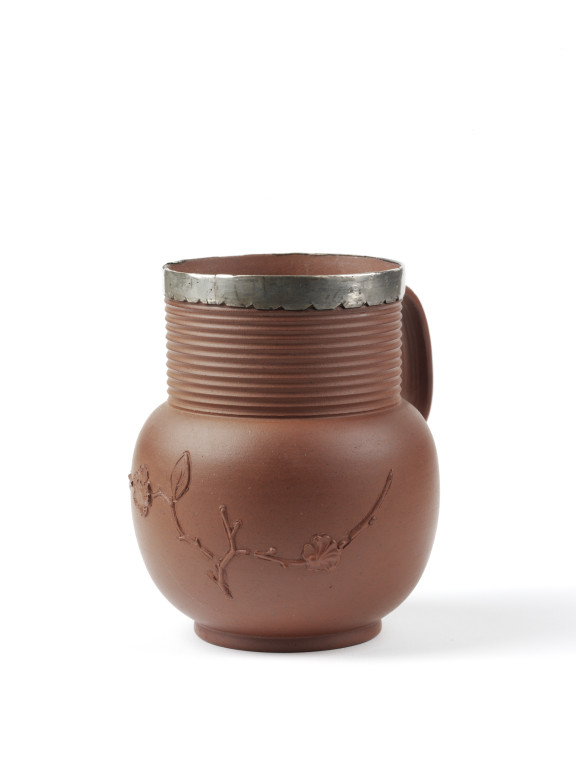
| Wedgwood Rosso Antico Jug Late 18th C or early 19th C |
| Wedgwood Ross Antico Teapot 1810-20 (V&A) |
| Wedgwood Rosso Antico Coffee Pot 1815 (V&A) |
Subscribe to:
Posts (Atom)