I’ve been rather amused that my mudlarking to date has been
quite’ gendered’, no digging or getting dirty for me. Only finding and probably
looking for pottery, quintessential domestic remains. The boys on the foreshore
invariably have their detectors, I assume metal their primary interest, coins, tokens, buttons, keys, buckles, musket balls, canon balls and badges.
Scanning my selected patch I found my first metal find – pins – a wry
smile about their domestic origins. I’d seen the guys on Mudmen uncovering pins
on the foreshore, so I was half looking for these and there they were, not
exactly in their hundreds but quite numerous.
 |
| 17th ? Century Pins found Mudlarking on the Thames Foreshore |
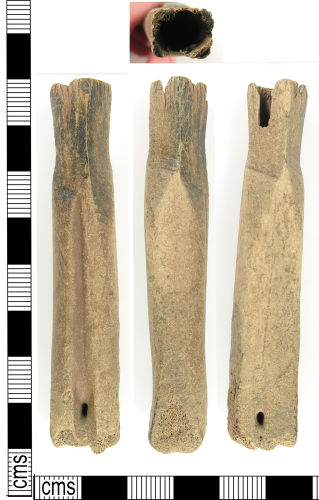 |
| 16th Century Pinner's Bone with grooves at top where pins were laid for sharpening, from Portable Antiquities Scheme |
Ordinary people would have a small number of pins, the
wealthy thousands. Janet Arnold documents the pin purchases from
Elizabetht I over 6 months
"Item
to Roberts Careles our Pynner for xviij [18] thousand great verthingale Pynnes
xx [20] thowsand great Velvet Pynnes and nyne thowsande smale hed Pynnes and
xix [19] thowsand Small hed Pynnes all of our great warderobe"
Pins were carefully looked after and sharpened periodically.
They were extracted after use so as not to tarnish the fabric and placed in a
pincushion. The portrait of Countess of Southampton shows her pincushion on the dressing table.
 |
Countess of
Southampton's Dressing Table with Pin Cushion 1590. From It's About Time
|